Johnson Controls Thermostat Manual: A Comprehensive Guide
This manual details Johnson Controls thermostats, covering models like WT-4000, TEC3000, and T-4752, alongside discontinued options such as the GLAS thermostat.
Understanding Johnson Controls Thermostats
Johnson Controls thermostats are renowned for their reliability and adaptability across diverse HVAC systems. These controllers manage temperature by interfacing with heating, cooling, and ventilation equipment. The range includes pneumatic-to-digital options like the WT-4000 series, bridging older pneumatic systems with modern digital controls.
Furthermore, the TEC3000 series offers networked capabilities, supporting BACnet and N2 protocols for advanced building automation. Understanding the specific model—whether it’s a simple T-4752 or a more complex networked controller—is crucial for proper installation, programming, and troubleshooting. Proper operation ensures optimal comfort and energy efficiency.
Types of Johnson Controls Thermostats
Johnson Controls offers a diverse thermostat portfolio, catering to varied HVAC needs. The WT-4000 Series converts pneumatic signals to digital, ideal for retrofits. TEC3000 Series controllers provide networked control via BACnet or N2, supporting on/off, floating, and proportional outputs for unitary rooftop units and heat pumps.

The simpler T-4752 Thermostat delivers reliable temperature management. While discontinued, the GLAS Smart Thermostat (SIO2-10000) represented a foray into smart home integration. Selecting the right type depends on system requirements and desired control features.
Pneumatic-to-Digital Control Thermostats (WT-4000 Series)
The WT-4000 Series bridges older pneumatic systems with modern digital controls. These thermostats accept pneumatic input signals – typically 3-15 psi – and convert them into corresponding digital outputs. This allows integration of existing pneumatic actuators and dampers with contemporary building automation systems.
Designed for retrofit applications, the WT-4000 simplifies upgrades without requiring extensive rewiring. Data sheets provide detailed specifications and application guidance for optimal performance and compatibility.
TEC3000 Series Thermostat Controllers
TEC3000 Series controllers offer versatile, stand-alone operation with selectable BACnet MS/TP or N2 networking capabilities. They provide on/off, floating, and proportional control for diverse HVAC applications. These controllers manage single or two-stage unitary rooftop units (RTUs), with or without economizers and heat pumps.
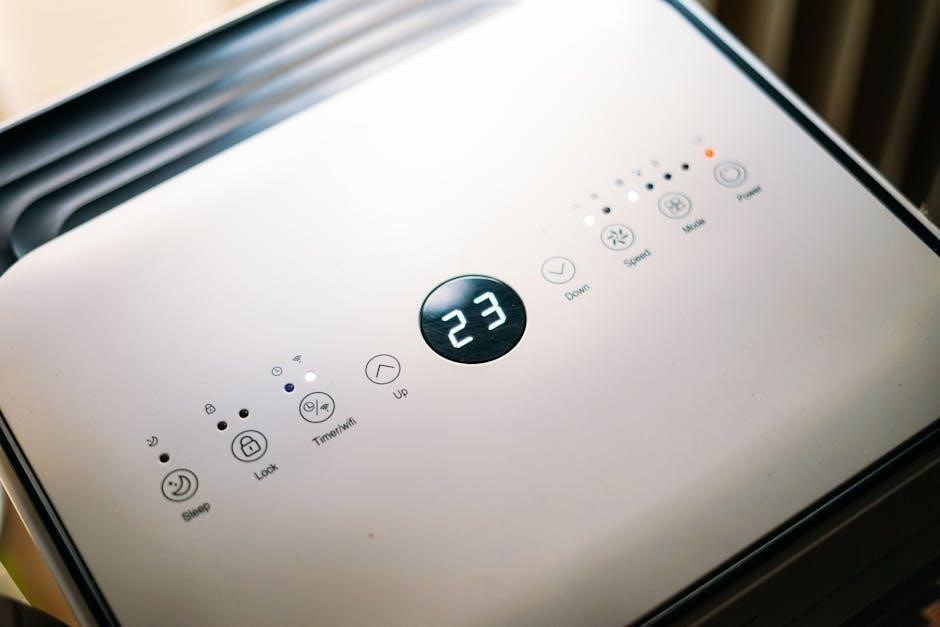
Users can cycle through control modes by pressing the ‘Mode’ button. The TEC3000’s adaptability makes it suitable for a wide range of building automation projects.
T-4752 Thermostat
The T-4752 Thermostat is a high-performance, precision instrument designed for accurate temperature control within various building environments. While specific details regarding its features are limited in the provided text, it’s understood to be a capable thermostat within the Johnson Controls product line.
Further information regarding its specific functionalities, wiring configurations, and programming options would be found in dedicated T-4752 documentation.
Discontinued Models
Johnson Controls has made the strategic decision to discontinue certain thermostat models, including the innovative GLAS Smart Thermostat (SIO2-10000). This means the GLAS thermostat is no longer available for purchase, and the associated mobile application will cease to receive updates or bug fixes.
Customers currently using discontinued models are encouraged to explore current Johnson Controls offerings for replacement options and continued support.
GLAS Smart Thermostat (SIO2-10000)
The GLAS Smart Thermostat, model SIO2-10000, represented a forward-thinking approach to home climate control. However, after careful evaluation, Johnson Controls has discontinued this product. Consequently, the dedicated GLAS by JCI mobile app will no longer be maintained with feature enhancements or critical bug resolutions.
Existing GLAS users should consider transitioning to a currently supported Johnson Controls thermostat for continued functionality and support.
Key Features & Control Modes
Johnson Controls thermostats offer versatile control options to optimize comfort and energy efficiency. These include On/Off Control for simple heating or cooling, Floating Control allowing proportional adjustments based on system demand, and Proportional Control for precise temperature regulation.
The TEC3000 Series, for example, supports all three modes, enabling adaptable solutions for various HVAC systems, including rooftop units with or without economizers and heat pumps.
On/Off Control
On/Off Control is the most basic thermostat function, directly activating or deactivating the heating or cooling system based on the setpoint temperature. When the room temperature falls below the setpoint, the system turns on; when it exceeds it, the system shuts off.
This mode is straightforward and suitable for applications where precise temperature maintenance isn’t critical, offering a simple solution for basic climate regulation within a space;
Floating Control
Floating control offers a more nuanced approach than simple on/off operation. Instead of directly commanding the heating or cooling equipment, the thermostat sends a signal indicating a need for more or less heat/cool.
The controlled device then determines the appropriate response, allowing for more sophisticated systems and potentially improved energy efficiency. This method is often used with modulating actuators for precise temperature regulation.
Proportional Control
Proportional control represents an advanced method for maintaining desired temperatures. The TEC3000 Series controllers notably support this, adjusting output based on the difference between the setpoint and the actual temperature.
This creates a smoother, more stable heating or cooling response, minimizing temperature swings and enhancing comfort. Proportional control is ideal for systems requiring precise regulation and optimized energy usage, offering a refined level of climate management.
Programming & Settings
Johnson Controls thermostats offer flexible programming options, notably through the FCP-NA-701 and FCP-PA-701 models. The FCP-NA-701 operates exclusively in Hold mode, maintaining a constant temperature. Conversely, the FCP-PA-701 provides both Hold and Schedule modes.
Schedule mode allows users to define temperature settings for different times and days, optimizing comfort and energy efficiency. Selecting the desired control mode is achieved by pressing the ‘Mode’ button repeatedly.
Hold Mode (FCP-NA-701 & FCP-PA-701)
Hold mode maintains a consistent temperature setting, overriding any programmed schedule. The FCP-NA-701 model exclusively operates in Hold mode, providing a simple, fixed-temperature control solution. With the FCP-PA-701, Hold mode is active unless a schedule is specifically enabled.
This feature is ideal for situations requiring a constant temperature, regardless of time or day. No button presses are required for extended periods while in Hold mode.
Schedule Mode (FCP-PA-701)
Schedule mode, exclusive to the FCP-PA-701 model, allows for programmed temperature adjustments throughout the day. This enables customized comfort and energy savings by automatically changing settings based on time. To activate Schedule mode, ensure it is enabled within the thermostat’s settings.
This feature offers flexibility, adapting to occupancy patterns and preferences. Without enabling the schedule, the FCP-PA-701 will default to Hold mode operation.
Troubleshooting Common Issues
Addressing issues promptly ensures optimal thermostat performance. Common problems include communication errors, potentially stemming from wiring or network connectivity. Display problems, such as a blank screen, might indicate power failures or internal component issues. Carefully review wiring diagrams and power requirements.
If problems persist, consult the manual’s detailed troubleshooting section or contact Johnson Controls customer support for assistance. Proper diagnosis is key to resolving these concerns efficiently.
Communication Errors
Communication errors can disrupt thermostat functionality. These often arise from incorrect wiring, loose connections, or network configuration issues within BACnet MS/TP or N2 systems. Verify all wiring connections according to the provided diagrams, ensuring secure placement. Check network settings and confirm compatibility between devices.
If the issue continues, consult the manual’s troubleshooting guide or contact Johnson Controls support for advanced diagnostics and potential solutions.
Display Problems
Display issues on Johnson Controls thermostats can range from a blank screen to distorted characters or flickering. First, check the power supply to ensure adequate voltage is reaching the unit. If the display remains unresponsive, attempt a reset by briefly interrupting power.
Consult the manual for specific reset procedures for your model. If problems persist, a component failure may require professional service or replacement.
Technical Specifications
Johnson Controls thermostats exhibit varied specifications depending on the model. Generally, power requirements range from 24VAC to a battery-powered operation. Operating temperature ranges typically span 32°F to 122°F (0°C to 50°C), though specific limits are detailed in each product’s datasheet.
Models like the TEC3000 support BACnet MS/TP communication, while others utilize simpler on/off control. Always refer to the individual model’s documentation for precise technical details.
Power Requirements
Johnson Controls thermostats utilize diverse power sources. Many models, including those in the TEC3000 series, commonly operate on 24VAC power, supplied through standard HVAC wiring. However, certain thermostats, particularly older or simpler designs, may function using battery power – typically AA or AAA batteries.
Always verify the specific power requirements detailed in the individual thermostat’s documentation before installation to ensure compatibility and proper operation. Incorrect voltage can cause damage.
Operating Temperature Range
Johnson Controls thermostats are engineered for reliable performance across a broad spectrum of environmental conditions. Generally, these thermostats function optimally within an ambient temperature range of 32°F to 122°F (0°C to 50°C).
However, specific models, like those designed for industrial applications, may exhibit wider operating ranges. Exposure to temperatures outside the specified range can affect accuracy and potentially damage the thermostat. Consult the product datasheet for precise limits.
Wiring Diagrams & Installation
Proper wiring is crucial for correct thermostat operation. Johnson Controls provides detailed wiring diagrams for each model, illustrating connections for power, control signals, and communication networks. Installation typically involves mounting the thermostat to a wall and connecting wires according to the diagram.
Ensure power is off during installation. Refer to figures 12-16 for T22 series controls. Always verify compatibility with your HVAC system before connecting any wires, and consult a qualified technician if needed.
Typical Wiring Configurations
Common configurations include standard 24V systems, utilizing wires for power (R, C), heating (W), cooling (Y), and fan (G). More complex setups may involve economizer control (O/B) and auxiliary heat (Aux). Diagrams illustrate connections for both conventional and heat pump systems.
Referencing figures 12 through 16 is essential for T22 series controls. Always double-check wiring against your specific HVAC system’s requirements and the thermostat’s documentation.
Understanding Figures & Diagrams
Johnson Controls manuals utilize figures to clarify wiring and control sequences. Figures 4 and 5 present graphical data, likely illustrating performance characteristics or control loop responses. Crucially, figures 12-16 specifically detail wiring for the T22 series controls, showcasing various configurations.
Careful interpretation of these diagrams is vital for correct installation and troubleshooting. Always correlate the figure with the accompanying text for a complete understanding of the system.
Interpreting Figures 4 & 5 (Graphs)
Figures 4 and 5 within Johnson Controls documentation present graphical representations, likely depicting system performance under varying conditions. These graphs illustrate relationships between parameters like temperature, control output, and time. Analyzing these visuals aids in understanding system response and stability.

Pay close attention to the axes labels and units to correctly interpret the data. These graphs are essential for diagnosing control loop behavior and optimizing system settings.
Understanding Figures 12-16 (T22 Series Controls)

Figures 12 through 16 detail wiring configurations for the T22 Series controls, showcasing various applications like off-auto changeover (Fig. 12) and different control types (Figs. 13-16). These diagrams are crucial for correct installation and troubleshooting.
Each figure illustrates specific wiring connections, identifying terminals and components. Carefully review these diagrams before attempting any wiring to ensure proper functionality and avoid system damage.
Tools & Accessories
Essential tools for Johnson Controls thermostat maintenance include the JC 5309 screwdriver, specifically designed for accessing and adjusting thermostat components. Additionally, Allen head cover screws are frequently used in these systems, requiring the appropriate Allen wrench for removal or tightening.
These accessories ensure proper installation and servicing. Availability of certain parts, like screws, may be limited to quantity orders, requiring direct contact with Customer Service for procurement.
JC 5309 Johnson Controls Screwdriver
The JC 5309 screwdriver is a specialized tool crucial for servicing Johnson Controls thermostats. Its design allows access to recessed screws commonly found within these units, facilitating adjustments and maintenance procedures. This screwdriver ensures proper engagement without damaging delicate components.
Using the correct tool prevents stripping screw heads and simplifies the overall repair process. It’s a recommended accessory for any technician working with Johnson Controls HVAC systems, ensuring efficient and reliable service.
Allen Head Cover Screws
Johnson Controls thermostats frequently utilize Allen head cover screws to secure panels and components. These screws offer a clean aesthetic and prevent unauthorized access to internal settings. A corresponding Allen wrench (often the JC 5309 screwdriver) is required for removal and installation.
Care should be taken during removal to avoid stripping the screw heads. These screws are often found covering critical adjustment points, ensuring secure and tamper-resistant operation of the thermostat.
Customer Support & Resources
For assistance with your Johnson Controls thermostat, dedicated customer service is readily available to address inquiries and provide technical support. Access comprehensive product catalogs and detailed data sheets online to find specific model information.
Contacting customer service directly can resolve complex issues or clarify installation procedures. Johnson Controls boasts a 140-year history of innovation, continually shaping the industry and supporting customer missions.
Contacting Customer Service
To reach Johnson Controls customer service for thermostat support, utilize the resources available through their official channels. Direct contact is crucial for resolving intricate problems or clarifying specific installation details.
For quantity orders or specialized assistance, reaching out to their team ensures tailored solutions. Johnson Controls, with its 140 years of industry leadership, prioritizes customer support and continuous innovation, powering missions globally.
Accessing Product Catalogs & Data Sheets
Johnson Controls provides comprehensive product catalogs and data sheets accessible through their official website. These resources contain detailed specifications, wiring diagrams, and technical information for each thermostat model, including the WT-4000 and TEC3000 series.
Locating these documents is vital for proper installation, troubleshooting, and understanding the full capabilities of your Johnson Controls thermostat. They support informed decision-making and efficient system management.